

What We Do
Location
123 Business Street, Suite 456
New York, NY 10001, USA
Contact us
Location



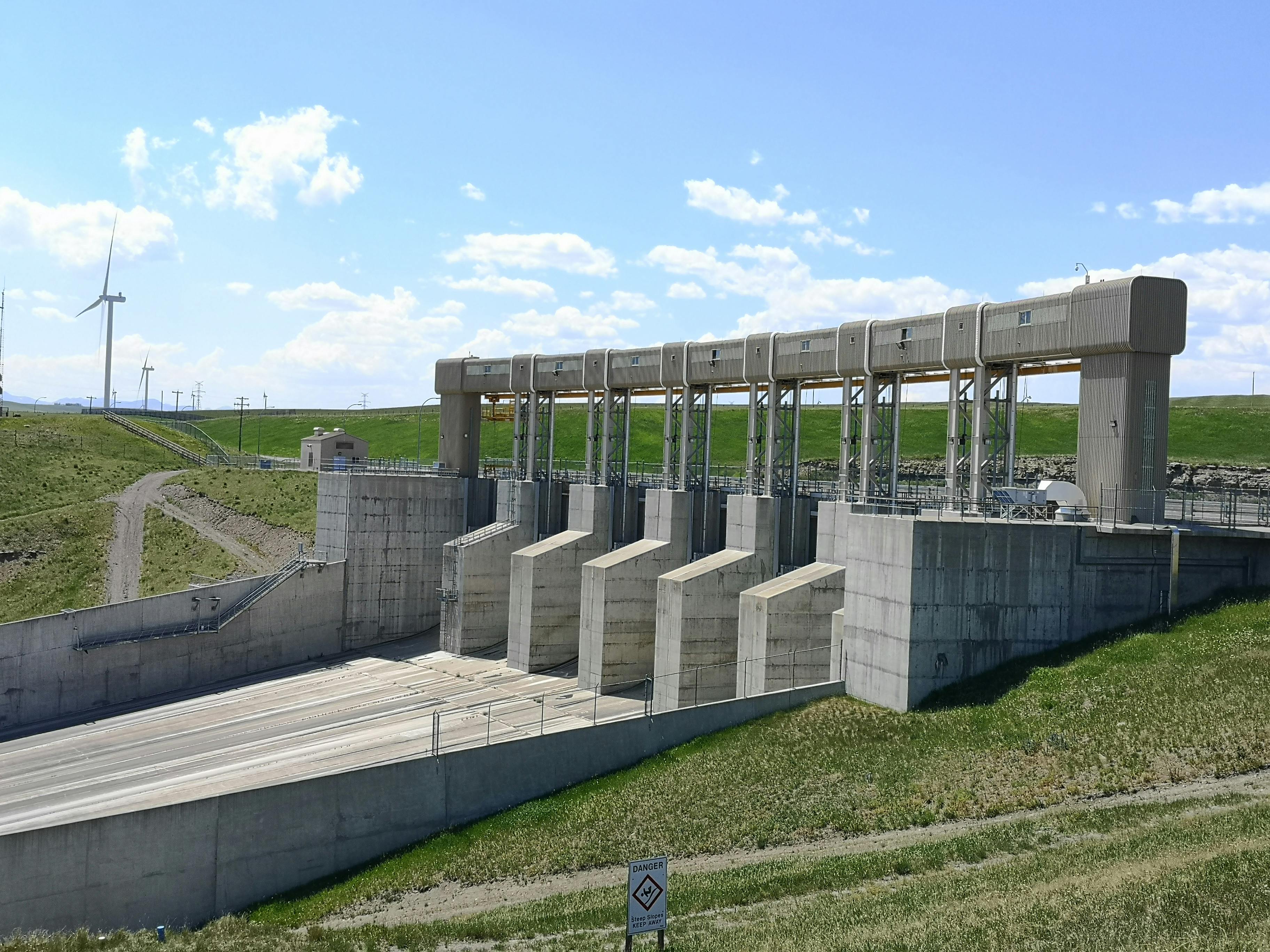


Canadian industrial operators are no longer asking whether energy will constrain their growth. They are already managing it.
Energy in Canada is abundant on paper, but in practice it is increasingly shaping what companies can build, scale, or operate reliably.
Canada’s per capita energy consumption is among the highest in the world, nearly three times the European Union average, driven by a mix of electricity, fossil fuels, and industrial demand. According to data from Natural Resources Canada and Enerdata, the industrial sector alone accounts for roughly 30 percent of total final energy consumption, with fossil fuels, especially natural gas, representing the majority of that use.
This profile has supported economic growth, but it also exposes operators to growing constraints. Tightening grid capacity, volatile fuel logistics, rising peak prices, and limits on how much and how fast industrial heat can be electrified are becoming material barriers. These are not future projections. They are conditions industries across Canada are already encountering.
Energy constraints in Canada vary by region and sector, but they are increasingly visible across the system.
Canada’s electricity system remains dominated by hydro power. According to Natural Resources Canada and the Canada Energy Regulator, hydroelectricity accounts for just over 60 per cent of total electricity generation. This makes Canada one of the most hydro-dependent power systems in the world.
Despite the low-carbon mix, provincial electricity grids differ widely in flexibility and capacity.
Demand growth is accelerating: the Canada Energy Regulator’s latest outlook forecasts total electricity demand rising by 25 to 35 per cent by 2030, driven by industrial electrification, electric vehicles, data centres, and building electrification.
In regions such as Alberta and Ontario, system operators have publicly reported increasing pressure on connection queues and grid capacity.
At the same time, Canada’s industrial heat system remains heavily dependent on fossil fuels. According to Natural Resources Canada, natural gas accounts for over 50 per cent of final energy demand in the industrial sector, particularly supplying process heat in oil and gas, mining, chemicals, and manufacturing.
The combined effect of these trends is a system under strain. Electricity grids in multiple provinces are approaching capacity limits for new high-demand connections, while pipelines and fuel infrastructure continue to provide critical load following and backup energy.
Several forces are converging to make energy a gating factor for industrial operators:
The consequence? Even well-capitalised projects may be slowed or reshaped by energy availability, timing, and cost
In response, operators are shifting how they think about energy.
Rather than focusing only on cleaner or cheaper supply, many are prioritizing flexibility, control, and reliability. The objective is not incremental optimization. It is removing energy as a binding constraint on operations and growth.
This has driven interest in technologies that change how energy is stored, delivered, or deployed within real operating conditions.
One response to energy constraints focuses on high-temperature industrial heat.
Technologies such as those developed by FeX Energy convert low-cost, intermittent electricity into firm, high-temperature heat using thermochemical storage. By decoupling heat delivery from real-time grid availability, these systems enable peak shaving, load shifting, and multi-day renewable firming without requiring major grid upgrades.
For heat-intensive operations, this reframes the challenge from whether electrification is possible to whether reliable operation can be maintained within existing constraints.
Not all constraints can be addressed through long-term system replacement.
In fleet and mobile infrastructure contexts, diesel remains a near-term reality. Technologies such as hydrogen diesel dual-fuel retrofits, including those deployed by Diesel Tech Industries, reduce fuel consumption and emissions while preserving operational flexibility.
These solutions address fuel logistics risk and reliability today, allowing operators to decarbonize incrementally rather than waiting for full asset turnover.
In distributed energy systems, the constraint is often not generation capacity but execution.
Labour shortages, safety considerations, and inconsistent installation timelines can delay projects even when demand and financing exist. StarDroid, developed by Stardust Solar, automates and standardizes key aspects of rooftop solar installation.
By reducing dependence on scarce skilled labour and improving consistency and safety, this approach enables faster and more predictable deployment of distributed energy systems.
Another emerging response focuses on improving on-site energy flexibility and resilience.
SOMA Energy develops modular battery energy storage systems and hybrid power solutions designed to stabilize power supply, reduce peak demand costs, and integrate renewable energy in real operating environments.
By enabling load shifting, backup power continuity, and improved energy management, these systems help industrial operators maintain reliability while reducing exposure to grid constraints and price volatility.
Together, these examples point to a broader shift.
Industrial operators are moving away from energy strategies optimized solely for cost or emissions. Increasingly, they are optimizing for operational freedom. Flexibility, resilience, and control are becoming as important as efficiency.
Energy considerations are now tightly linked to expansion planning, asset life, and risk management. Organizations that account for constraints early are better positioned to move when opportunities arise.
Even when technologies perform as intended, scaling them is not automatic.
Commercialization requires alignment between operators, deployment pathways, capital structures, and regulatory environments. Bridging these elements is often what determines whether a solution moves beyond the pilot stage.
This is where ClimateDoor’s work sits, supporting technologies that address real operational constraints and helping translate them into scalable deployments.
Energy constraints are unlikely to ease in the near term. As electrification and industrial demand continue to grow, these limitations will become more visible.
The solutions that scale will be those that restore flexibility, integrate with existing systems, and deliver reliability under real conditions.
For industrial and infrastructure operators, the question is no longer whether energy matters, but how early it is factored into decision-making.
A: Alberta and Ontario report the highest grid capacity pressure due to oil sands operations and manufacturing density. Natural Resources Canada data shows Alberta's industrial sector consuming 30% of provincial electricity with natural gas supplying over 50% of final energy needs.
A: Hybrid demand response programs, on-site solar + storage, and process heat recovery deliver the fastest ROI. These bridge solutions work with existing infrastructure while buying time for full electrification.
A: We embed inside companies to identify bankable energy efficiency projects, structure government grant applications (BC Hydro, FortisBC), and connect operators to cleantech partners delivering proven ROI within 18 months.
A: Not before 2028-2030 per IESO and AESO forecasts. Middle-market operators cannot wait, deploying hybrid clean energy now creates competitive advantage during the constraint window.


