

What We Do
Location
123 Business Street, Suite 456
New York, NY 10001, USA
Contact us
Location



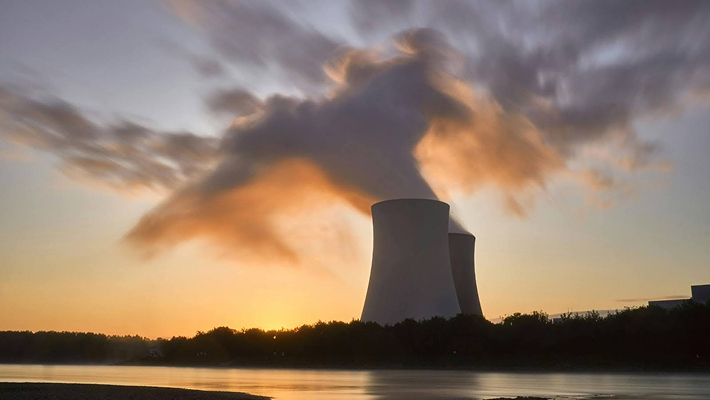


Three of five signals this week point to the same structural shift. Federal policy, private capital, and Indigenous equity are converging around Canada's energy infrastructure. The window for clean energy companies to position ahead of this procurement wave is measured in weeks, not months.
Energy and Mining Minister Tim Hodgson confirmed on March 5 that the federal government will release a new national electricity and nuclear strategy within the coming months. The strategy will focus on removing market barriers between provinces, finalizing interprovincial energy corridor agreements, and positioning Canada as a global energy superpower.
Why it matters: Every procurement framework, incentive program, and priority project designation for Canadian clean energy will flow from this document. Clean energy companies that understand what the strategy will prioritize before it drops will be positioned to move immediately. Those who wait to read it will be six months behind.
Stuttgart-based Metergrid closed an oversubscribed €10 million Series A on January 29, the largest growth financing ever recorded in the German tenant electricity market. The round was led by SET Ventures. Metergrid builds SaaS products that automate solar tenant-power models and EV charging infrastructure for multi-tenant buildings, turning landlords into clean energy providers.
Why it matters for Canada: Canada's net metering framework under BC Hydro is structurally similar to Germany's Mieterstrom model, and no dominant SaaS platform has emerged here yet. European VCs are writing large checks in this category, which means North American equivalents are next. This is an early signal of where Canadian PropTech and energy software investment is heading.
Vancouver-area startup Brilliant Harvest closed a $4 million CAD seed round in February to expand its AI customer experience platform for heavy equipment dealers. The company serves OEMs, including CNH Industrial, AGCO, and Kubota, and currently covers more than 50% of CNH Industrial's North American dealer network. Investors include Builders VC, AltaML, and Alpaca VC.
Why it matters: The agricultural and industrial equipment supply chain is electrifying and decarbonizing. Brilliant Harvest sits directly at that intersection with proven distribution and institutional investor validation. Canadian seed-stage companies with this level of commercial traction in the industrial decarbonization space are exactly the profile that moves to growth-stage support within 6 to 12 months.
Houston-based Quaise Energy broke ground on March 3 on Project Obsidian, a 50-megawatt superhot geothermal plant in central Oregon using millimeter-wave drilling technology that melts rock to depths conventional drills cannot reach economically. The company has already signed a power purchase agreement for the initial 50MW and is seeking $100 million in Series B financing plus $100 million in grants and debt, targeting a 2030 commercial launch. Separately, oil major Occidental completed twin four-mile-deep geothermal wells in Colorado in under six weeks using a DOE-backed $9 million grant, demonstrating that oil industry drilling expertise is now crossing into geothermal at scale.
Why it matters for Canada: Superhot geothermal could unlock firm, clean power for British Columbia and Alberta without exotic volcanic geology. Geothermal projects coming online in the Pacific Northwest between 2028 and 2032 will need commercial strategy and partnership development support. This sector moves from the watchlist to the pipeline within two years.
Four First Nations in northwestern Ontario, including Animbiigoo Zaagi-igan Anishinaabek and Red Rock Indian Band, secured 50% ownership of the Greenstone Transmission Line, a 230-kilometre project designed to unlock the Ring of Fire critical minerals district. Separately, Mi'kmaq and Mi'gmaq communities in Nova Scotia and New Brunswick received a $54 million equity loan from the Canada Infrastructure Bank to purchase direct ownership stakes in the Wasoqonatl interprovincial transmission line. The federal government also announced more than $850,000 in investments supporting 14 Indigenous projects through its Critical Minerals Infrastructure Fund.
Why it matters: This is not a consultation. This is 50% equity ownership of a major grid infrastructure, backed by the Canada Infrastructure Bank at an institutional scale. The shift from revenue-sharing agreements to direct ownership is accelerating across solar, transmission, storage, and critical minerals simultaneously. Clean energy projects that do not have Indigenous equity at the table are increasingly out of step with how federal capital is being deployed.
Traditional geothermal energy is limited by depth. The hotter, more energy-dense rock is typically too deep and too hard to drill economically. Quaise Energy's approach uses high-powered millimeter-wave radiation, the same technology found in microwave ovens and 5G networks, to vaporize and melt rock, enabling drilling to depths and temperatures that conventional rotary drills cannot reach. At temperatures above 300 degrees Celsius, a single geothermal well can generate 5 to 10 times more power than a conventional well. If Project Obsidian succeeds in Oregon, it would open superhot geothermal to most of North America, including British Columbia and Alberta.
The ClimateDoor Weekly Signal covers the five cleantech and climate finance stories most relevant to Canadian operators, investors, and founders. Published every Friday.
ClimateDoor is a Vancouver-based cleantech commercialization platform helping climate ventures raise capital, land partnerships, and scale in the Canadian market.


