

What We Do
Location
123 Business Street, Suite 456
New York, NY 10001, USA
Contact us
Location



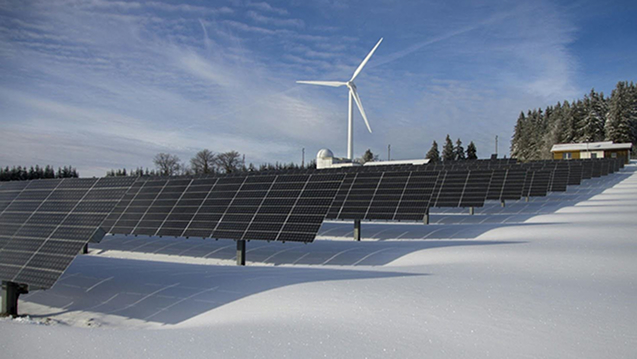


This week's theme: Green Bank Capital is freezing. The commercial pivot is already underway, and British Columbia just handed the clean energy sector its clearest near-term opportunity in years.
Two of this week's five signals carry immediate action implications. The B.C. Indigenous solar funding announcement creates a live partnership window for any operator with clean energy assets in Western Canada. Meanwhile, European carbon market politics are signalling something important: policy durability, not policy risk, is now the dominant narrative in mature climate markets. Combined with a mainstream bank leading a hydrogen infrastructure round and an Indian EV operator deploying a Series A playbook worth studying, this is a week where the strategic landscape has shifted.
Italy proposed suspending or fundamentally changing the EU Emissions Trading System (ETS) ahead of the March 19-20 EU summit. Eight countries, Denmark, the Netherlands, Sweden, Finland, Spain, Portugal, Slovenia, and Luxembourg, issued a joint non-paper this week calling the ETS the cornerstone of EU climate policy and warning that weakening it would undermine investment signals and market stability. ETS revenues dropped from 33 billion euros in 2023 to 24 billion euros in 2024 due to lower carbon prices, but the system remains a critical funding mechanism for climate projects.
Why it matters: This is a stability signal, not an opportunity. The pushback shows that carbon pricing regimes in mature markets are becoming entrenched despite political headwinds. For companies eyeing European expansion, whether in EV charging, hydrogen, or grid infrastructure, this is evidence that carbon compliance infrastructure will remain intact through 2030 and beyond. Policy durability equals investable market. Reference this when pitching to risk-averse investors or European partners who need regulatory confidence before committing to long-term deals.
Indian EV charging network operator Statiq Mobility closed an $18M Series A round this week to expand operations, upgrade hardware management systems, and improve software and telematics. The company has now raised $45.5M total over four rounds. Funds will focus on scaling infrastructure reliability and supporting growth in India's fast-moving EV sector, where public charging stations are projected to hit critical mass by 2027.
Why it matters: This is the playbook any EV charging operator should be studying. Statiq is solving the same core problem, scaling reliable charging networks, but in a market with less regulatory friction and more aggressive deployment timelines. The hardware and software integration focus mirrors what any operator needs to demonstrate before Series B conversations. The signal for Canadian operators: India is moving toward charging infrastructure critical mass by 2027, and the operators who win are prioritizing reliability metrics over raw network size.
Albuquerque-based Mantis Space exited stealth mode on March 12 with an oversubscribed $10M seed round led by Rule 1 Ventures and Montauk Capital. The company is building a constellation of satellites to deliver continuous solar power to other spacecraft, solving the Earth's shadow problem that forces satellites into periodic blackouts. The technology targets defense, commercial satellite operators, and future lunar missions.
Why it matters: This is a science project on a 5-10 year commercialization horizon - not an ICP-aligned opportunity for near-term commercial partnerships. The signal worth filing: deep tech VCs like Rule 1 Ventures and Montauk Capital are deploying capital into space-based clean energy. If you are building relationships with these funds for other reasons, this tells you something about their appetite for long-horizon bets. No immediate action required unless you have a direct relationship with investors in their network who might hold portfolio companies more aligned with near-term commercial timelines.
Bengaluru-based Newtrace closed a $6.3M pre-Series A round on March 10, led by HDFC Bank and Mitsui Sumitomo Insurance Venture Capital, with participation from Peak XV and others. The company develops advanced electrode technology for electrolysers used in green hydrogen production, aiming to reduce costs and improve efficiency. Newtrace is now valued at $30M and plans to accelerate commercialization in India's growing hydrogen economy.
Why it matters: The lead investor is the real headline. HDFC Bank, a traditional, risk-averse financial institution, is leading a hydrogen infrastructure round. That is mainstream financial confidence arriving in the sector in a visible and credible form. For anyone pitching hydrogen-adjacent technologies to fleet operators, port authorities, or institutional capital, this data point matters. The narrative it enables: even traditional banks are now funding hydrogen infrastructure plays. Newtrace's focus on electrolyser components is upstream from deployment, adjacent to hydrogen dual-fuel and retrofit operators without being directly competitive.
British Columbia announced $6.6M in funding this week to help remote First Nations communities reduce diesel reliance through clean energy projects. Major disbursements include $1.5M for a 3.5 MW solar design project in Tsay Keh Dene Nation, $870K for a solar-coupled pumped storage system in Xeni Gwet'in First Nation, and $1.1M for commissioning a 3.8 MW solar plant in Ulkatcho First Nation. The province is prioritizing energy sovereignty and cost reduction in diesel-dependent communities.
Why it matters: This is a direct and time-sensitive revenue opportunity. Communities transitioning away from diesel but not yet ready for full electrification need hybrid solutions that work with existing infrastructure. The $6.6M announcement is a conversation opener. Any clean energy operator with solar installation capacity or hydrogen retrofit capabilities in Western Canada should be reaching out to B.C. operations this week. The value proposition that fits this context: hybrid energy sovereignty solutions combining existing diesel infrastructure with new solar or hydrogen capacity. Confidence in this play is high. This is the week's most actionable signal.
Technology to Know
Sodium-Ion Batteries:
Unlike lithium-ion batteries, which rely on scarce, critical minerals, sodium-ion batteries use abundant sodium (table salt) as the primary charge carrier. They are cheaper to produce, safer (lower fire risk), and perform well in cold climates, making them ideal for stationary storage and low-speed vehicles. The main trade-off is lower energy density, so they are heavier and bulkier than lithium-ion batteries, which limits their use in high-performance EVs.
The ClimateDoor Intelligence Brief covers the cleantech and climate finance stories most relevant to Canadian operators, investors, and founders.
ClimateDoor is a Vancouver-based cleantech commercialization platform helping climate ventures raise capital, land partnerships, and scale in the Canadian market.


