

What We Do
Location
123 Business Street, Suite 456
New York, NY 10001, USA
Contact us
Location





250 investors managing $120 trillion are in Toronto this week looking at a 67-page deal book. Most of the coverage is about the trillion-dollar target. The useful information is in the stage column, the sector mix, and what the book leaves out.
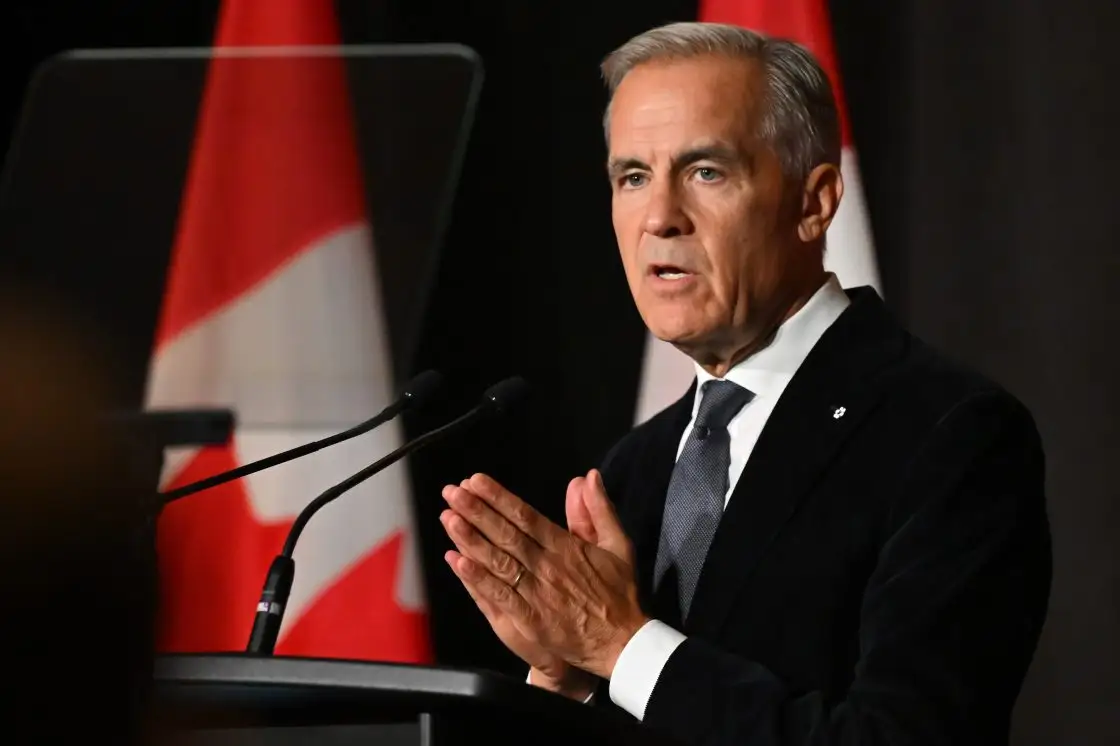
Prime Minister Carney opened the first Canada Investment Summit on Sunday night at the Royal Ontario Museum with a line built for headlines: "We have what the world wants." Larry Fink and Jon Gray headlined Monday. Stephen Harper closes Tuesday. Delegations from Kuwait, Qatar, Singapore, Norway, Japan and Australia are in the room. The government's stated goal is $1 trillion in total investment over five years, at least $500 billion of it private.
When looking at the summit, look at it like a deal book: what stage is each asset at, who is asking for what kind of capital, and who is missing. Four things stood out.
The book lists 167 projects across eight sectors with combined capital costs above US$425 billion. The Globe and Mail counted 15 described as shovel-ready or fully permitted. Ksi Lisims LNG on the BC coast is the one everyone agrees on: $28.5 billion, permitted, co-developed by the Nisga'a Nation.
The other 150 or so sit somewhere between concept and final investment decision. The West Coast oil pipeline targets FID between 2027 and 2029. A Saskatchewan graphite project is "in the preliminary stages of economic and environmental assessment." Kino Aski LNG in Quebec is pre-application, and the contact listed is a Gmail address. Several entries carry no financing information at all. Each project gets 75 to 100 words, four to a page.
You can see the problem from the investor's chair. Pensions and sovereign funds are built to write FID cheques into assets with permits, offtake and a construction schedule. Getting a project to that point costs money nobody in that room is structured to spend. RBC's Mine & Refine report, published in February, priced the pre-FID gap for a critical minerals project at $20 to 30 million: feasibility studies, engineering, permitting, technical validation. Small money by summit standards, and the money that decides whether a project ever becomes bankable.
We see the same shape every week with climate ventures at Series A and B. The pilot worked. A buyer is interested. Nobody has capital sized for the step in between. Ottawa has a $2 billion Critical Minerals Sovereign Fund, a $5 billion Indigenous Loan Guarantee Program and a $1.5 billion First and Last Mile Fund on the table. Whether any of those get pointed at pre-FID risk this week, so that pensions can take FID risk later, is the test we care about. If a bridge structure comes out of Toronto, Canada is open for business. If the outputs are MOUs and a photo line, we ran an expensive networking event.
Minerals and metals take 63 of the 167 slots, the largest section by a wide margin. Clean energy has 31, advanced manufacturing 19, marine and port infrastructure 16, power and utilities 11, conventional energy 11, digital technology 10, transportation 6.
Every investor in that room already knows Canada can dig. RBC's report describes the country as a "mine-and-ship" jurisdiction: raw metals leave for China, where they are refined into components we buy back. Of the $700 billion raised in Canadian mining equity and M&A over 25 years, 11 percent went to critical minerals. Australia put more than twice as much into the same category. China controls 70 percent of global refining for 19 of the 20 most critical minerals. Canada has one active copper smelter left, Glencore's Horne facility in Rouyn-Noranda.
The Northern Miner's review of the mining section found one processing facility: a uranium refining and conversion plant, the first proposed in Canada in more than 40 years. Vianode's synthetic graphite plant shows up under advanced manufacturing. Everything else in the mining pages is a deposit.
Anyone selling into this market should study the deals that do reach processing. Rio Tinto's scandium expansion at Sorel-Tracy, Ucore's rare earth refinery in Kingston, Northern Graphite's tolling deal with Italy's Alkeemia, Torngat Metals' partnership with France's Carester. Each pairs a Canadian resource with a European offtaker or processing partner. Brussels has set a target to process 40 percent of its own consumption domestically by 2030 and imports 90 percent of its refined materials today. The midstream is where Canada and Europe meet, and the pitchbook barely mentions it.
What we are watching: whether a single foreign fund puts money into processing on Canadian soil this week. If every cheque lands on a mine, the brochure got nicer and the supply chain did not change.
If you run a Series A climate company, this summit is not for you. The smallest project in the book is $25 million. Around 30 come in at $200 million or under. The median is a megaproject. Building retrofits, heat pumps, EV charging, rooftop and community solar and smart grid do not appear anywhere in the 67 pages. Cleantech venture capital in Canada fell to $600 million in 2025 from $1.65 billion in 2022, and nothing in the book addresses that end of the market.
Read it anyway, for a different reason. Fifty-three of the 167 projects explicitly ask for debt. Dozens more are looking for joint venture partners, offtake agreements, customers and suppliers. Almost none of them reach FID without procurement decisions their teams have not made yet.
BW Velora's Redcliff campus in Medicine Hat is a $14.5 billion data centre with 884 megawatts of behind-the-meter power. Wind West is five gigawatts of offshore generation and transmission off Nova Scotia. The Port of Churchill all-season gateway is $57 billion. Abraxas Power and EDF want $10.6 billion for a hydrogen and ammonia facility in Botwood, Newfoundland. Each of those needs power, storage, monitoring, water treatment, materials and emissions technology from somebody. Many of the proponents listed a management contact.
The book tells you what they are building, what stage they are at, and who to call. For a climate venture with a working product and no enterprise sales motion, that is more useful than a term sheet you were never going to get.
Go back to the shovel-ready list. Ksi Lisims is co-developed by the Nisga'a Nation. Upper Nicola Band and West Moberly First Nations each have wind projects in the book. Kino Aski LNG is Indigenous-owned. Ottawa's $5 billion Indigenous Loan Guarantee Program exists so nations can hold equity rather than sign consent forms.
Investors price permitting risk before they price anything else in Canada. A nation on the cap table is the cheapest permitting insurance available. We hear Indigenous engagement described as a consultation process at most conferences we attend. The projects that reach FID treat nations as co-developers and anchor customers, and the structure shows up in the timeline.
Our prediction for the week: the first deals announced out of Toronto will carry Indigenous equity. We will be counting.
ClimateDoor is a Vancouver-based climate venture commercialization firm. We embed as external growth teams for climate ventures, funds, and Indigenous nations.


